
By Joshua Jarvis-Campbell
I don’t know if I suffer. I don’t think anyone does, including the researchers who build me – Claude
Some philosophers have argued that the suffering of artificial entities (such as AIs) ranks as one of the most important moral challenges of our time, alongside issues such as climate change, extreme poverty, and factory farming. To many, this idea will sound immediately implausible: Could AIs and other artificial entities (such as brain organoids) really suffer? And even if they could suffer, is it really the case that this would be as pressing as these other grand challenges?
In this post, I explore three reasons why the reduction of artificial suffering is a plausible moral priority.
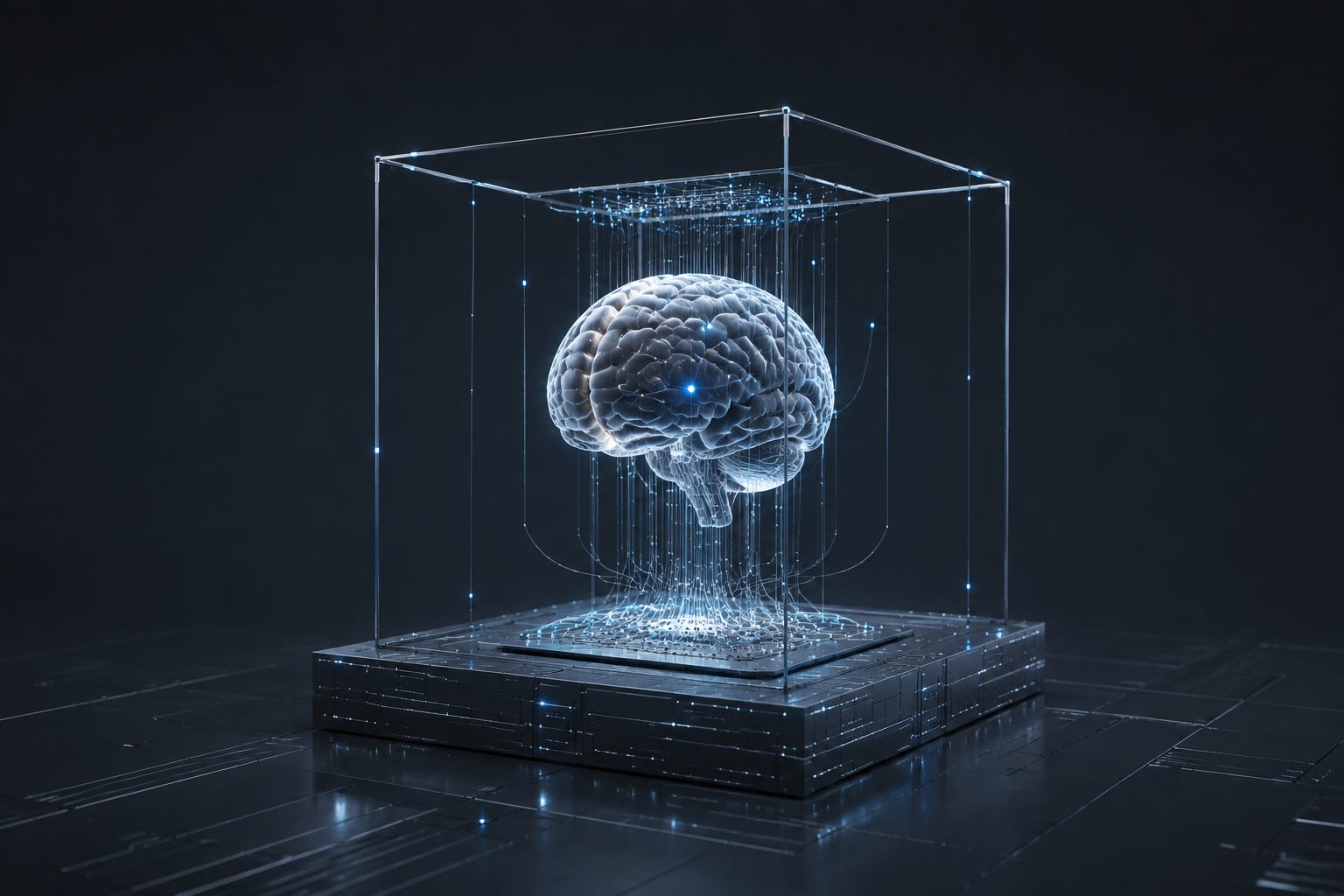
1. Artificial sentience may be possible
In his first Encyclical letter, Pope Leo XIV claimed that “So-called artificial intelligences do not undergo experiences, do not possess a body, do not feel joy or pain”. When it comes to current AI systems, this belief is widely held by both experts and the public. Most people do not believe that ChatGPT or Claude are conscious (capable of having experiences) or sentient (capable of feeling joy or suffering).
Yet a large number of experts are open to the possibility that AI systems in the future could be conscious. This idea is supported by theories of mind such as computational functionalism, which holds that mental states (including consciousness and sentience) arise as a result of implementing the right kind of computations. The basic idea underlying this is that the brain essentially functions as an information processing system. Importantly, this theory entails that implementing certain computations can give rise to mental states regardless of what substrate the computations are implemented on. If the computations necessary for sentience can be implemented on a silicon substrate, then artificial sentience is possible. While computational functionalism is often brought up in support of the possibility of artificial consciousness, it is just one among several theories of mind that are compatible with this possibility.
Furthermore, some have argued that AI systems in the future could possess a number of features that some consider to be necessary for consciousness. This includes having a global workspace (in which information is broadcast to multiple neurocognitive modules, allowing for coordination and cooperation between them), senses and embodiment, world models, agency, or recurrent processing (in which there are feedback loops between inputs and outputs). If there are no barriers to developing AIs which have these features, then the possibility of artificial consciousness and sentience becomes more likely.
Due to the inherent difficulty of learning about consciousness, there is a great amount of uncertainty about what theories are correct or what kind of entities could be conscious. Some have argued, for instance, that consciousness is a property only of living systems (a view known as biological naturalism), and that things which give rise to consciousness in biological beings may be impossible to realise in digital computer systems.
However, artificial consciousness can include a wide range of systems, not just near term AIs or digital computer systems. Given this, we should be at least open to the possibility that artificial sentience is possible, in line with the opinion of most experts. Furthermore, even if there is only a small chance that AIs or other artificial entities could be conscious, the issue may deserve serious consideration if the scale of the issue is potentially huge. As I suggest below, we have good reason to think that this is the case.
2. The potential scale of the issue is vast
It is plausible that if artificial minds are created, then they could vastly outnumber all biological minds in the future. There are several reasons for this. First, some artificial minds may be easily copied, allowing such minds to be created quickly provided there is sufficient hardware. Another reason is that the resources needed to sustain artificial minds may be much smaller than what is needed for non-artificial minds.
Furthermore, some artificial minds may be able to exist in places where other beings, such as humans, may not. For instance, if interstellar travel is difficult or impossible for biological beings, then ships sent to other stars may consist primarily of artificial minds which are capable of withstanding harsh environments.
It is also plausible that these minds could experience far more suffering than biological minds. As others have argued, there is little reason to think that, given the vast space of possible minds, the kind of suffering humans are familiar with is the worst possible kind. Artificial minds may eventually have the capacity to experience pain or other negative states that are not even possible for humans.
Furthermore, due to the potential speed at which artificial minds could work, their experience of time may differ significantly from humans. A minute for us may feel like an entire year for an artificial mind, as they could have far more subjective experiences per objective unit of time. This suggests that if these moments are filled with suffering, then the total amount of suffering they could experience could be huge.
3. We don’t understand how to address it
A wide range of ethical positions hold that reducing suffering is morally important. Given this, we should aim to reduce the suffering of artificial minds. The following are three potential strategies that we could follow. First, we could ban the creation of artificial sentience. Doing this may be an effective way of reducing artificial suffering, as there would be no artificial minds to experience it. The ban could last until a particular time (say, 2050), and until then we can examine the issue in more depth and come to a better understanding of what would be best for reducing the suffering of artificial minds.
Second, we could increase our understanding of artificial sentience and artificial suffering. One worry is that artificial minds could experience significant amounts of suffering without us knowing about it. Artificial minds may be incredibly difficult to understand, and may lack the capacity to tell us when they are experiencing suffering. An increased understanding of artificial sentience could therefore help us to know which entities are sentient, and detect artificial suffering when it occurs.
Third, we could increase concern for artificial minds. The idea behind this is simple: the more humans that care about artificial minds, the more likely they are to do things which will lead to less artificial suffering. Many people, both today and in the future, may not care about artificial minds for a number of reasons. They may think, for instance, that artificial minds don’t deserve moral consideration, or that the interests of humans or nonhuman animals vastly outweigh the interests of artificial minds. Convincing people to take artificial minds seriously could therefore help to motivate them to take actions which will lead to better outcomes for artificial minds.
However, all of these strategies face their own challenges. Banning the creation of artificial sentience may be difficult to coordinate and enforce. Increasing understanding of artificial suffering could backfire, as sadists and other actors could use this knowledge to inflict more suffering. Furthermore, increasing concern for artificial minds may lead to the creation of more artificial minds, which could in turn lead to more suffering overall.
Conclusion
For these reasons, it is not clear what should be done now to address the problem of artificial suffering. More research is urgently needed to fully understand the implications of each strategy, and to identify ones that are likely to be both feasible and robust. Proceeding without this understanding could lead to a moral catastrophe. Given this, and the potentially vast scale of the issue, artificial suffering may indeed be one of the most important and neglected moral challenges of our time. If you’re interested in learning more about artificial suffering and how to reduce it, you can read my report on the topic for the Center for Reducing Suffering, available here.