
HOW CAN WE BEST REDUCE SUFFERING?
Our mission is to reduce severe suffering, taking into account all sentient beings and long-term consequences. We’re a think tank fostering research and action toward this goal, with particular attention to mitigating worst-case outcomes that could arise from advanced AI or expansion into space.
Read the books

Suffering-Focused Ethics:
Defense and Implications
In Suffering-Focused Ethics, Magnus Vinding argues that the reduction of suffering deserves special priority, and explores how we can best reduce suffering in practice.
Suffering-Focused Ethics provides the most comprehensive presentation of suffering-focused arguments and views to date in a single place, including a moral realist case for minimizing extreme suffering. The book then explores the all-important issue of how we can best reduce suffering in practice, and outlines a coherent and pragmatic path forward.
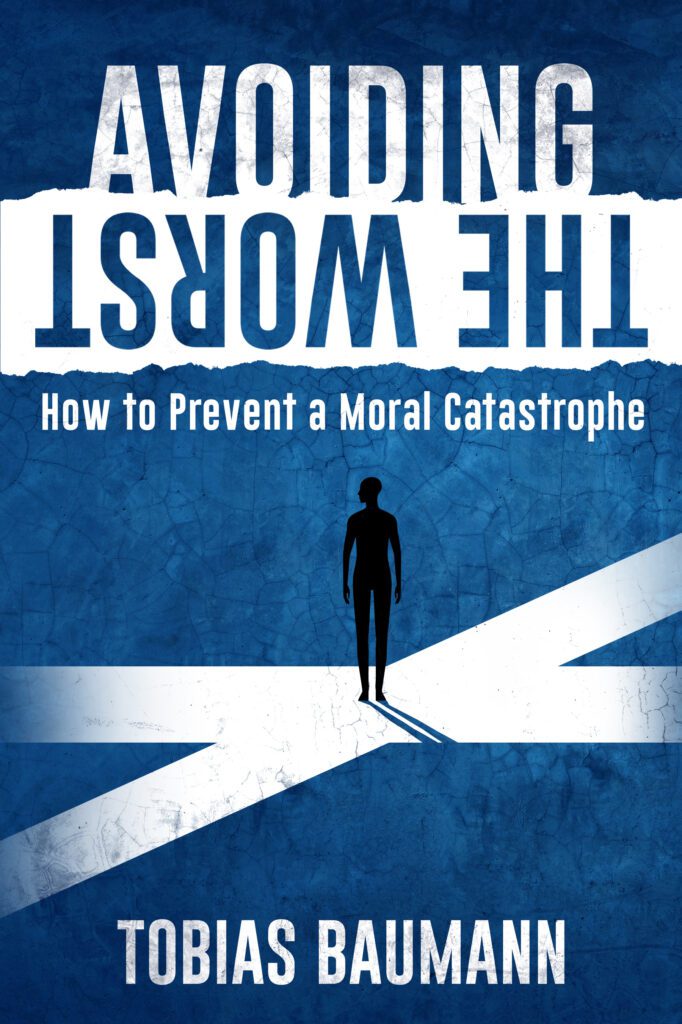
Avoiding the Worst:
How to Prevent a Moral Catastrophe
From Nineteen Eighty-Four to Black Mirror, we are all familiar with the tropes of dystopian science fiction. But what if worst-case scenarios could actually become reality? And what if we could do something now to put the world on a better path?
In Avoiding the Worst, Tobias Baumann lays out the concept of risks of future suffering (s-risks). With a focus on s-risks that are both realistic and avoidable, he argues that we have strong reasons to consider their reduction a top priority. Finally, he turns to the question of what we can do to help steer the world away from s-risks and towards a brighter future.
Research
Our work focuses on the following main areas:

We develop and discuss ethical views that give special priority to the reduction of suffering.

We explore scenarios that might result in significant levels of intense suffering on an astronomical scale (s-risks), and aim to better understand how to prevent such worst-case outcomes.

We research what our priorities should be at a practical level so as to reduce suffering in the most effective ways.
Blog

Making Concern for Suffering Common Knowledge
Often, what matters is not simply what people know, but what they know others know. When something is common knowledge, everyone knows it, everyone knows that everyone knows it, everyone knows that, and so on. A classic illustration is in The Emperor’s New Clothes: everyone can see that the emperor is naked, but no one […]

Should Artificial Suffering Be a Moral Priority?
By Joshua Jarvis-Campbell I don’t know if I suffer. I don’t think anyone does, including the researchers who build me – Claude Some philosophers have argued that the suffering of artificial entities (such as AIs) ranks as one of the most important moral challenges of our time, alongside issues such as climate change, extreme poverty, and factory […]

Suffering-Focused Ethics and Space Colonisation
By Caleb Peppiatt Suffering-focused ethics is a set of moral views that place particular importance on the prevention and mitigation of suffering. This includes the prevention of “risks of astronomical suffering” that might be brought about due to humanity’s efforts to colonise space (Kovic, 2021; Baumann, 2022). Previous debates in space ethics have rarely placed […]
Person-Affecting or Suffering-Focused?
We are in favor of making people happy, not making happy people, said Jan Narveson. The slogan captures the core idea of person-affecting ethics. On these views, ethics is fundamentally about what is good or bad for people, rather than about making the world impersonally better. This view might look attractive. Suppose we can either cure malaria (preventing enormous suffering […]
Implausible, or Just Unfashionable?
As part of our effort to build a community around reducing suffering, we’re currently running our online introductory course on suffering-focused ethics (SFE). Week 3 is titled: Implausible, or Just Unfashionable? What do we mean by this? SFE remains relatively peripheral in both academic ethics and public discussion. When people discuss ethics, they typically treat suffering as one […]
The Case for Suffering-Focused AI Governance
AI may become one of the most important technologies shaping the future of sentient life. It could transform medicine, scientific research, economic productivity, and more. It could even reshape the kinds of minds that exist and the experiences they are capable of having. AI could help us substantially reduce suffering. But it could also increase suffering, potentially even […]

A Misconception about Reducing Suffering
Can reducing suffering be pursued in a healthy and inspiring way? Some may assume that working to reduce suffering must be a joyless, tedious pursuit. This reaction is understandable. If we focus on the worst forms of suffering, we will confront things that may make us sad or fearful. We may come to appreciate just […]

Meaning and Reducing Suffering
Once upon a time, meaning and purpose didn’t need to be found—they found us. The task was survival: keeping warm, finding food, keeping the wolves and the raiders at bay. Purpose was immediate, physical, undeniable. Today, for many of us in rich, secure societies, the wolves are gone, replaced by hums and screens. The fridge […]
A New Course
Suffering-focused ethics (SFE) is a family of moral views that gives special priority to reducing suffering. As you might know, we at CRS find SFE deeply compelling—it is, after all, the backbone of our work. Part of our mission is to research and build a field around SFE. Unfortunately, SFE remains highly neglected in both academia and […]

Five Questions About Wild Animal Suffering
In the wild, life is often far harsher than we tend to imagine. Many animals face constant threats—hunger, disease, injury, predation, and exposure—and a large number die young, often in prolonged and painful ways. Given the vast number of animals living in these conditions, this suffering may exist on an enormous scale, yet it remains largely overlooked. Why is this? Is […]

Basic Rights for AIs
The topic of AI welfare is fast becoming mainstream. As I wrote in my last post, there’s an emerging debate that has been drawing some strong reactions. There is some resistance to even treating AI welfare as a legitimate concern. But there’s a perhaps more understandable resistance—not to taking AI welfare seriously in general, but to particular […]
The AI Welfare Question
For decades, mainstream AI ethics and safety discourse has focused on risks to humans. The idea that we might owe moral duties to AI systems themselves has remained fringe, often dismissed as speculative philosophy. Not four years ago, Google fired engineer Blake Lemoine after he publicly claimed that the company’s chatbot had become sentient. Today, however, people […]

Should Suffering-Reducers Focus on AI?
If we want to reduce suffering over the long term, should AI be a top priority? As capabilities advance and talk of AGI and the singularity fills the airwaves, some argue we should focus heavily on AI. Others are skeptical. In their view, steering AI may be just one important cause among many—and prioritizing it […]

The Case for Being Nonpartisan
Modern politics often turns moral issues into tribal contests. Crucial debates about what we should value and how we should act quickly devolve from truth-seeking to status-defending, as ideas and causes become signals of identity and allegiance. If we hope to reduce suffering, this pattern is dangerous. When a cause gets caught up in a […]
Reducing Suffering: An Institutional Approach
There are many different approaches we can take to reduce suffering. One that seems especially promising is to target society’s institutions and better equip them to reduce suffering. Why institutions? First, they have disproportionate power. Legal systems, markets, regulatory frameworks, research norms, media ecosystems, and international agreements do not merely express social values; they shape […]
The Animal Gap in AI Governance
By Alistair Stewart How can we steer AI development today and in the future to reduce animal suffering, rather than increase it? One place to look is AI governance: the set of norms, policies, laws and institutions whose purpose is to influence how AI is developed and used. Last year, Ronen Bar and I conducted […]

Non-Negligible: We Should Not Ignore S-risks
Pascal famously argued that belief in God is rational because of the expected value of belief. If God exists, the rewards of believing—eternal salvation—are infinite, while if God does not exist, the costs of believing are finite. Even a minuscule probability of an infinite reward seemingly swamps any worldly cost. That is the core of Pascal’s Wager. […]

Does Suffering-Focused Ethics Valorize the Void?
Richard Y. Chappell urges us not to “valorize” the void. According to Chappell, any adequate moral framework must recognize the existence of positive intrinsic goods and not focus solely on bads. Utopia, he contends, is clearly better than an empty void, and it should be table stakes for moral theories to acknowledge this. Suffering-focused ethics (SFE) holds that […]

Deadline Extended! Apply Now for the Intro to S-Risk Fellowship
Applications are now open for a new fellowship from CRS covering a variety of topics related to s-risks and suffering reduction.

CRS Fundraiser 2025
Following a productive 2025, CRS plans to continue scaling its research and outreach in 2026 to help create a future with less suffering. To support this growth, we’re aiming to raise USD 200,000 to secure and strengthen our team. We are entirely funded by individual donors, and we greatly appreciate your support. As we approach […]

The Compensation Question
Can anything morally outweigh or compensate for extreme suffering? This simple question strikes at the heart of ethics. Yet too often, it is neglected. It may be hard to think about this question in the abstract. To bring it into focus, let us consider a few concrete cases. The Drowning Child Perhaps you have encountered Peter […]
Facing Up to the Worst
Most efforts to reduce suffering focus on helping individuals alive today. This is understandable, given the tragedies that currently exist. Many millions of people endure immense suffering due to poverty, wars, disasters, chronic pain, depression, and so on. On an even greater scale, tens of billions of animals live and die miserably in factory farms […]

Many Roads Lead to Prioritizing Suffering Reduction
Many arrive at suffering-focused ethics (SFE) through a consequentialist lens, reflecting on how actions produce better or worse outcomes. From this perspective, one might recognize that suffering possesses a uniquely negative moral weight—a kind of disvalue that other states, including happiness, cannot counterbalance. Yet this is only one path to the view that reducing suffering should take moral […]

Meet CRS Event Recording
CRS hosted a public end-of-year call to share more about what CRS is working on, how we approach reducing suffering, and what we see as the key priorities ahead. The event included a short presentation on our current work, followed by an open Q&A with CRS founders Magnus Vinding and Tobias Baumann. Thank you to […]

Building the Fortress
Reframing Suffering-Focused Ethics By David Veldran Many moral views and social projects present themselves as inherently positive and constructive. They aim to add something to the world, to create, to build. Classical utilitarians seek to increase happiness and bring about a surplus of joy over misery. Communists aspire to realize a classless society. Kantians, perhaps, aim to […]

Open Position: Communications, Outreach, Ops (Contractor Role)
The Center for Reducing Suffering (CRS) is looking for a thoughtful and proactive new team member. We are looking for someone who can help us carefully communicate complex ideas about suffering reduction to our audience, and/or someone who can help us with operations.

CRS Fundraiser 2024
As we approach the end of the year, we’d like to take this opportunity to thank you for your ongoing support of Center for Reducing Suffering (CRS) and our research. It has been a busy year for CRS, with several important firsts, including the launch of our new s-risk fellowship. We’ve released new research, books […]
2024 Financial Report
As part of our commitment to transparency and accountability, CRS is pleased to share details of our budget and finances. We are grateful for our donors’ support, which helps us to continue our work and implement our Strategic Plan. Should you have any questions, please feel free to reach out to us, or use our […]

Minimalist Axiologies Book Available Now
CRS researcher, Teo Ajantaival, has released a new book: Minimalist Axiologies: Alternatives to ‘Good Minus Bad’ Views of Value.
2023 Financial Report
As part of our commitment to transparency and accountability, CRS is pleased to share details of our budget and finances. We are grateful for our donors’ support, which helps us to continue our work and implement our Strategic Plan. Should you have any questions, please feel free to reach out to us, or use our […]
CRS Fundraiser 2023
As we approach the end of the year, we’d like to take this opportunity to thank you for your ongoing support of CRS and our research.

Tobias Baumann Appears on the Sentientism Podcast
CRS co-founder and researcher, Tobias Baumann, has appeared on the Sentientism Podcast for a discussion with host Jamie Woodhouse.
2022 Financial Report
As part of our commitment to transparency and accountability, CRS is pleased to share details of our budget and finances. We are grateful for our donors’ support, which helps us to continue our work and implement our Strategic Plan. Should you have any questions, please feel free to reach out to us, or use our […]

Avoiding the Worst Audiobook Available Now
CRS Co-Founder Tobias Baumann’s introduction to s-risks, Avoiding the Worst: How to Prevent a Moral Catastrophe is now available as an audiobook. Professionally voiced by Adrian Nelson, the full audio can be listened to on Audible or there is a free video version now available on the new CRS YouTube channel. A summary of Avoiding […]

Tobias Baumann Discusses S-Risks & Avoiding the Worst on FLI Podcast
Center for Reducing Suffering Researcher and Co-Founder Tobias Baumann has appeared on the Future of Life Institute podcast to discuss S-Risks (risks of astronomical future suffering), suffering-focused ethics, and his book Avoiding the Worst: How to Prevent a Moral Catastrophe. In the first part of a wide-ranging conversation with the podcast’s host Gus Docker, Tobias […]

Popular views of population ethics imply a priority on preventing worst-case outcomes
A wide variety of views can support a focus on preventing worst-case outcomes. More than that, it appears that the views of population ethics held by the general population also, on average, imply a priority on preventing futures with large numbers of miserable beings. My aim in this post is to elaborate on this point […]

2022 End-of-Year Fundraiser
2022 has been an exciting year for us. It saw the release of Magnus Vinding’s book Reasoned Politics, Tobias Baumann’s book Avoiding the Worst: How to Prevent a Moral Catastrophe. In addition, we published several essays on suffering–focused ethics. We are now raising money to consolidate our financial situation. We believe that CRS’s open-ended research […]

New book on s-risks
I have just published my new book on s-risks, titled Avoiding the Worst: How to Prevent a Moral Catastrophe. You can find it on Amazon, read the PDF version, or listen to a provisional audio version. The book is primarily aimed at longtermist effective altruists. I wrote it because I feel that s-risk prevention is a somewhat neglected priority area in […]

Reply to the “evolutionary asymmetry objection” against suffering-focused ethics
An objection that is sometimes raised against suffering-focused ethics is that our intuitions about the relative value of suffering and happiness are skewed toward the negative for evolutionary reasons, and hence we cannot trust our intuition that says that the reduction of suffering is more valuable and more morally important than the creation of happiness. […]

Open position: Communications Manager
We’re looking for a Communications Manager to help us communicate our mission to broader audiences. About the role In this role, you’ll work at the heart of our organisation. You’ll help improve our online and social media presence, host high-impact events, and stay in touch with our supporters and donors. Above all, you will continually […]

Comments on Mogensen’s “The weight of suffering”
Andreas Mogensen’s paper “The weight of suffering” presents an interesting argument in favor of the axiological position that “there exists some depth of suffering that cannot be compensated for by any measure of well-being” — a position he calls “LTNU” (Mogensen, 2022, abstract). Mogensen then proceeds to explore how one might respond to that argument […]

Reply to Chappell’s “Rethinking the Asymmetry”
My aim in this post is to respond to the arguments presented in Richard Yetter Chappell’s “Rethinking the Asymmetry”. Chappell argues against the Asymmetry in population ethics, which roughly holds that the addition of bad lives makes the world worse, whereas the addition of good lives does not make the world better (other things being […]

Reply to Gustafsson’s “Against Negative Utilitarianism”
This post is a reply to Johan Gustafsson’s draft paper “Against Negative Utilitarianism”. Gustafsson acknowledges that for many common objections raised against negative utilitarianism (NU), there are corresponding objections that can be raised against classical utilitarianism (CU) (see e.g. Knutsson, 2021a). Hence, as he writes, “these objections have little force when we assess the relative […]

Point-by-point critique of Ord’s “Why I’m Not a Negative Utilitarian”
The following is a reply to Toby Ord’s “Why I’m Not a Negative Utilitarian” (2013). Ord’s essay seems to have been quite influential, and is often cited as an essay that makes strong points against negative utilitarianism. While a number of critical replies have already been written, I still think there are many problematic things […]

Five recommendations for better political discourse
Introduction Political decisions arguably represent the linchpin of human decision-making, constraining and influencing every choice we make. And our political system is currently operating far from ideally, to put it mildly. This renders it uniquely important that we do better. From a longtermist perspective, what matters most is that we advance politics over the long […]

2021 Year in Review and Our Plans for 2022
Now that 2021 is over, we thought this would be a good time to reflect on what we accomplished during the last year, and what our goals are for 2022. Our Work in 2021 Accomplishments The following are some of the things we achieved during 2021: Transparency We think it’s important to be transparent about […]

Magnus Vinding Discusses Upcoming Book on the Utilitarian Podcast
CRS researcher and co-founder Magnus Vinding made a recent appearance on the Utilitarian Podcast hosted by Gus Docker. Magnus begins by presenting a number of arguments in favor of suffering-focused views and then proceeds to discuss their practical implications. In particular, he explores how we can best reduce suffering for people, animals, and potentially even […]

Comparing repugnant conclusions: Response to the “near-perfect paradise vs. small hell” objection
Minimalist views of value hold that “the less of a given bad, the better”, and further hold that the only form of positive value that exists is the reduction of bads (e.g. unmet needs). Negative utilitarianism is an example of a minimalist view, which specifically says “the less suffering, the better”. An objection sometimes raised […]

Tobias Baumann on the Sentience Institute Podcast
CRS researcher and co-founder Tobias Baumann recently appeared as a guest on the Sentience Institute Podcast. The podcast, hosted by researcher Jamie Harris, typically focuses on moral circle expansion and animal welfare. Tobias was featured in two episodes. The first episode covers moral circle expansion, cause prioritization, and s-risks. In particular, Tobias explains what moral […]

We’re Hiring!
We’re now hiring for remote roles, including but not limited to operations, growth, and research.

S-risk impact distribution is double-tailed
Discussions about s-risks often rest on a single-tailed picture, focused on how much suffering human civilization could risk causing. But when we consider the bigger picture, including s-risks from alien civilizations, we see that human civilization’s expected impact on s-risks is in fact double-tailed. This likely has significant implications. For instance, it might mean […]
2020 End-of-Year Fundraiser
2020 has been an exciting year for us. We officially set up the Center for Reducing Suffering (CRS) as an organisation, launched this website, and published articles on suffering–focused ethics, s-risks, and cause prioritisation. We are now raising money to consolidate our financial situation. We believe that CRS’s open-ended research programme on how to best […]

On fat-tailed distributions and s-risks
It is sometimes suggested that since the severity of many kinds of moral catastrophes (e.g. wars and natural disasters) fall along a power-law distribution, efforts to reduce suffering should focus on “a few rare scenarios where things go very wrong”. While this argument appears quite plausible on its face, it is in fact a […]

Longtermism and animal advocacy
There is a common tendency among effective altruists to think of animal advocacy as having little value for improving the long-term future. Similarly, animal advocates often assume that longtermism has little relevance to their work. Yet this seems misguided: sufficient concern for nonhuman sentient beings is a key ingredient in how well the long-term future […]

Note on Pummer’s “Worseness of nonexistence”
In “The Worseness of Nonexistence”, Theron Pummer makes an interesting argument that suggests that a failure to create new people can be as bad as cutting an existing person’s life short. I here briefly sketch out a reply to Pummer that can be made, in some version, from a variety of different views. Outline […]